Sunday, January 19, 2014

The Asamushi Onsen Experience

This past weekend, I went on another Prefecture-sponsored trip with a bunch of foreign exchange student. Having gone on plenty of these together, we've gotten much more familiar with each other at this point, and it feels a bit like taking a trip with your extended family.

Nevertheless, this time, our destination was nearby: Asamushi Onsen, a mere 10 kilometers east of my apartment in Aomori City. Asamushi, once a thriving and popular hot spring town, now caters to much fewer people after shutdowns due to economic decline and the unfortunate recent Great Earthquake. Even so, it's still a favorite place for residents of Aomori City to go and relax, and especially to have their end-of-the-year parties.

Asamushi Onsen during summer.
For us, though, our intention was to experience a bit of the local culture, whether it be traditional or brand new. Our first experience, we were told, would be snowshoeing. Since long ago, residents of Aomori Prefecture have needed to use primitive snowshoes woven out of plant material to walk atop the deep fluffy snow that falls in abundance every year. These days, the outdoorsy people still enjoy a good morning stroll out in the snow, but they use modern snowshoes manufactured from light polymers and metals.

Modern snowshoes

To our surprise, we wouldn't be snowshoeing. Instead, a representative from the ski company Blue Moris came and provided us with some quirky new equipment developed only in the last few years. I thought I had heard of Blue Morris before, and it turns out that they made the cross country skis you can freely borrow from Gappo Park.

The new equipment we were given is called "trekking skis" or "hiking skis". They start with short wide skis similar to ski-boards. On the underside, they attached a special pad made of fine brush-like bristles that are directionally oriented towards the back of the skis. These pads grip the snow when you push back, but allow for some sliding in the forward direction. Combined with a free-heel snowshoe binding and snazzy quick-release adjustable stocks, these trekking skis provide a profound walking function several times more effective than the waxless cross country skis I've used.

Modeling the blue directional pad and the unique free-heel snowboard binding.
How does I ski hike?
To test them out, we headed out to a local trail through the mountains. Our guides were experienced snowshoers and were wearing standard snowshoes, but they had never seen the trekking skis we were testing. They were merely there to guide us through the path. As the only person with cross country ski experience, I took the vanguard and headed up the steep narrow path first behind the snowshoe-equipped guide.


At the start of the hill, and already a great view of Yunoshima.
These trekking skis are amazing! The brush bristles on the pads grab on the snow so well that you can stroll up a slope of almost 30 degrees without slipping back! Try that on waxless xc skis! An added bonus is that the directional pads still provide some grip in the forward direction too, so while you won't be gliding across the flats very easily, you can descend in a controlled manner even on a steep straight path. I'm not a very experienced alpine skier, but even I descended through the trees with relative ease. I can imagine these things being a godsend for backcountry skiers/snowshoers or as training wheels for beginner alpine skiers.


While they are much easier than any other ski out there, they're still not easy enough to just slap on anyone and lead them up a mountain. The path we were on was a narrow snow-covered hiking trail, and some parts even had stairs! Almost all the other participants had no ski experience whatsoever (most were from southeast Asia, where snow doesn't fall), so there was a lot of floundering to get up the steeper portions of the trail. We in the front pack (4 US ALTs and a Korean CIR) reached the peak, and sat around waiting for 20 minutes for the rest of the pack to join up (which is how we filmed the video above). Our photographer from Hokkaido went on a nice rant about Asian girls and their inability at snow sports.


After taking a few pictures at the top, we now had the problem of getting back down the mountain. We were already late for lunch because of the stragglers, so the only option was to go back down the way we came. All the Asian girls freaked out and discussed what to do, while the ALTs nonchalantly started trudging back. The slide down was extremely fun even though it was steep, lined with trees, narrow, and with hairpin turns at every corner. The worst part was probably just the wait at the bottom, since everyone else decided to take their skis off and walk down. The organizers learned from their misjudgement, and the group after us took a leisurely stroll on a flat, wide trail around a lake instead.

The vanguard group and the Aussie-accent photographer.

After waiting half an hour for the group to reassemble and going back to eat lunch, we started our second activity: basket weaving! Called つる細工 tsuruzaiku in Japanese, it's essentially a craft for making baskets or furniture similar to wicker. You start out with many long strands of stiff wooden fibers, softened by being soaked in water. This reminded me of the joke we always made about useless "underwater basket weaving" classes, when in fact weaving a basket underwater would actually keep the fibers soft enough to manipulate!

Pre-soaked flexible wooden shafts
Anyways, several local ladies helped us out and taught us to make a small basket. Basket weaving may seem easy, but it's actually very time consuming and rough on the hands. You need to make sure the fibers don't dry out, so you're constantly spraying more water and gripping the rough wooden strands with damp hands. After about an hour and a half of weaving I had only managed to make a very small basket, maybe big enough for one large Aomori apple.


While chatting with the ladies, I learned that tsuruzaiku is a dying art. It's getting harder and harder to obtain the weaving materials, as most of it comes from southeast Asia now. Also, young people don't bother to learn it because they're always busy with school or would rather play video games. I can imagine that it's hard to get the motivation to spend hours weaving a small basket when you can just buy one at the local dollar store. It's a beautiful and interesting art, but sadly one that doesn't seem to have much of a future, at least here in Japan.

After everything was over, we all took a short bath at Yu~sa on the fifth floor onsen before heading back to Aomori City. With only 3 males in the group, the men's side felt like we'd reserved the whole place to ourselves. While soaking, we daydreamed about what it must be like on the crowded women's side filled with upwards of 15 foreign exchange college girls...

Anyways, that's all for this time, but I'm looking forward to all the interesting places I'll go to in the next trips! See you next time!

先週末、また留学生たちと国際交流会の旅行に行ってしまいました。もうたくさんの交流会の遊びに行ったから、このままはもう大家族と一緒に旅行するようです。

というわけで、今回の場所は浅虫温泉でした。青森市から東方面に進むと10kmだけです。まえはとても立派なにぎやかな温泉町でしたが、最近は色んな理由のせいで少し静かになりました。それでも、青森市民に極楽のところです。忘年会のにとてもポピュラー!

僕らには目的は文化体験、伝統的でも最近でも。最初の体験はスノーシューだと言われました。昔々、青森県民は交通のためにスノーシューをつるに作る必要でした。最近、冬でも山登りたい方はまだスノーシューを使っているが、今のモダンスノーシューはプラスチックやアルミから作られました。

 意外と私たちはスノーシューをしなかった。BLUE MORISという会社の代表が面白くて新しい道具を貸してくれました。BLUE MORISのことを聞とあるきがしたが、じつは合浦公園の貸し出し歩くスキーを作った会社です。

この新しい道具って?トレッキングスキーと言うものです。ベースはスキーボードみたいな短いスキーです。その下にマイクラッシのような特別なパッドが張ってあります。歩くときはこのパッドが雪にくっくっ付きますが、すべるときはそんなに邪魔をしない。歩くスキーと同じコンセプトだけど、この方がずっと効果的です!

近所の山道にためしにいきました。 スノーシューにはいっていたガイドさんが道案内して、私だけがクロースカントリースキーの経験ありましたので先に進みました。

トレッキングスキーすげい~~! 下のパッドがちゃんとくっ付いて急坂でも滑らない!前にも進めるが、パッドが少しブレーキつけるのでスピードが出ないし、コントロールが楽です。「山登りしたいだけどスノーシューがゆっくりで楽しくない」と思う人や「スキーやりたいだけどスピードこわい!」と思う人にBLUE MORISのトレッキングスキーおすすめです!

使いやすいでも、トレッキングスキーは誰でもすぐ山登りのために使えるわけではない。 私たちが行ったところが元は暖かい季節のハイキングトレールで、ある所に階段もありました!初心者には少しレベル高すぎて、ほとんどの参加者に奮闘でした。なかなかできる5人のJETの皆さんがずっとほかの留学生を待っていた。

それで、遅い人のせいでつい昼ごはんの時間になりました、どうやってやまを降りるかみんなが悩んでいた。私だけがスキー経験ありましたから、一人で楽しく滑って降りましたが、安全ため、ほかの人がスキーをはずして歩いて降りました。やはりトレッキングスキーはスキーをする人に楽ですが、スキー経験がない人にまだ難しいみたい。ガイドさんたちが考え直し、つぎのグループを違うコースに案内したそうです。

昼ごはんを食べた後、次の活動に進みました。つる細工ということはぬれたつるを使ってバスケットを作ることです。英語の"wicker"「ウィッカー」という細工に近いと思います。

とにかく、二人のおばさんが教えてくれました。つる細工がやさしそうなんだでど、思ったよりつかれるや。つるが乾いたら硬くなるから、すっとじめじめの手でがんばらなきゃ!そしてかなり時間かかります。一時間半後、小さいバスケットしか作れなかった、一個の大きい青森りんごのサイズくらい。

作りながら二人のおばさんと喋ると、つる細工をやる人が少なくなっていると気づきました。原料を手に入れるのは難しいし、若者がいつも勉強、ゲームとか夢中しているし、¥100ショップで買えたら作る必要もない。面白くて美しいアートなんだけど、未来はどうなるでしょう?

せっかく浅虫温泉に来たから、帰る前に少しだけ温泉に入りました。小さいけどいい景色が見える「ゆ~さ」の五階の銭湯に男性3人女性15人以上。男の部分は貸切のようで、ゆでながら「女性の部分はきっと込んでいてにぎやかだろうね~」と妄想しちうよねぇ。

今回で終わりなんですけど、次の交流会旅行たんしみだね!

Wednesday, January 15, 2014

The Rustic Lodge of Lamps: Aoni Onsen

When I first came to Japan, I got used to the whole public bathing thing pretty quickly. I also gained a greater appreciation for hot spring baths, and I began looking around for new and interesting onsen to visit. I've been to onsen all over the country, from Hokkaido to Kyushu, indoor and outdoor, local public bath and exclusive bath for overnight guests only. During all my research, there was one hot spring I thought I would never have the opportunity to go to. That was Aoni Onsen.

よぐきたねし yogukitaneshi: sounds dirty, but means "welcome" in tsugaru dialect

Aoni Onsen 青荷温泉 is a collection of several cabin-like lodges deep in the mountains of Kuroishi. For a long time, they operated without electrical power, so they burned oil lamps for lighting. This earned them the nickname "Lamp Lodge", or ランプの宿. These days, there is electricity to run telephones and basic lighting/heating/ventilation, but they still hold to tradition by burning oil lamps for lighting at night.

Iconic lamps of ranpu no yado
Even though Aoni Onsen is quite famous, it is one of the most difficult hot springs to access. Back when I didn't have a car, access was pretty much impossible, as there is only one bus that services that location (and it doesn't service Aomori City). Even by car, it's an hour and a half drive from Aomori City. During winter, the single narrow road that runs the 6 km to the onsen from the highway gets shut down because of massive snowfall, so the only way to get in is to ride the hourly shuttle provided by the lodge. They used to use a snowmobile-like tractor to transport people, but they've recently switched to using a 4x4 elevated bus.

Discontinued snow vehicles (not my picture)

The bus they use now.
With access being this difficult, I though I'd never get to experience such an interesting and unique place. Now that I have a car and better Japanese skills, I figured I'd give it a shot and booked a day trip for the day after New Years. You can come anytime during the year and autumn is very popular, but I wanted to go during winter because it's absurdly beautiful.


After driving for an hour and a half through snowy highways, we arrived at the parking lot in front of 虹の湖 nijinoko, or "Rainbow Lake", just before 10 am. There, the bus was waiting for us (and only us), and we hopped on with all of our bathing supplies. The bus climbed the treacherous slopes for 15 minutes before arriving at the lodge and letting us off.

The main entrance
It seems like day trips aren't very popular, so the place was almost empty. The whole day, there were only ever 2 people max with me in the baths, while Kristin didn't see a single bather the entire day. We checked in at the front desk and proceeded to investigate the 4 different bathing spots. As we walked outside, we caught a glimpse of the scenery we came to see.

So beautiful it hurts...
The first was the outdoor bath, or rotenburo 露天風呂 in Japanese. It's one of the few mixed-gender bathing spots left in Japan, although there is a "ladies time" reserved for the shy girls (damn them). There are two changing rooms (closets, more like) right beside the bath and no showers. We quickly changed and ran through the biting cold into the main pool. The water was warm, but not very hot, which is the same for most of the baths here.


Mixed bath! =]  Ladies time... =[


There is a proper bath just up the path from the rotenburo. While there still are no showers, there is body soap and buckets to dump water over yourself. The main attraction here is the view of the waterfall that feeds the stream running through the property. I noticed a small outdoor pool as well, so I ran out the door and hopped in. I soon regretted it, as the water was below body temperature, and I retreated back indoors.


Waterfall in the back. Don't be fooled by the pool ... it's cold!
We took a break from soaking by having our pre-ordered lunch. We sat in a large tatami room deemed the おしゃべりホール, or "chatting hall". There were a few other people in there waiting for food as well, but none of them were talking. So much for chatting...

し~~~ん

The food was good, but probably would seem strange for someone not accustomed to country cuisine. My 山菜定食, or "mountain vegetable meal", was chock full of slimy wild mushrooms (which are one of my favorites). Kristin's 川菜定食, or "river vegetable meal", had it's share of slimy mushrooms, but also came with a particularly yummy grilled fish. There were also the usual pickled vegetables, with the daikon radish one being particularly adorable.

3 kinds of slimy mushrooms and one kind of slimy plant. Aomori people sure love slimy food!
The pickled daikon is the shape of a horsey!!
 After lunch, we finished up the final two baths. One, in a building on the other side of the entrance, was the most comparable to a rustic hot spring bath. It had soft wooden boards surrounding a rectangular basin in the middle. The water was noticeably warmer here, which I appreciated. The girls side apparently had an outdoor bath too, but Kristin informed me that I wasn't missing out on much.

The final bath was a small one inside the main building. The water here was the hottest of them all, but the bath was only large enough to fit 3 or 4 people tops. We got our body temperatures high enough to brave the outside cold before packing up our things and calling it a day. We waited for the final bus out of there (at 2:40 pm) with several of the other guests that had stayed overnight, and finally witnessed a bus full of photo-taking guests arrive. I guess most visitors choose to stay the night instead of making it a day trip.

We had spent about 4 hours at the onsen soaking, relaxing, and eating. It was great to see the beautiful scenery, but the baths themselves were somewhat disappointing. I was especially hoping they'd be hotter, but only one or two were at a temperature I liked. I'm still debating whether I should come back, but I think it's an experience everyone should have at least once.

If anyone is interested, here is their website with information. Sadly, it's Japanese only, so good luck. During winter, they have a special pricing plan for both day trips and 2-night stays. The day trip plan that we used lets you get onsen access and lunch for an extremely reasonable 1,200-ish yen (many famous onsen will charge that or more for bathing ONLY), but you must call and reserve. Their 2-night 7-meal plan is also extremely reasonable compared to prices for other ryokan/minshuku, but it's only recommended for people trying to escape from the hustle and bustle of civilization for a while. Can you survive that long with no power, cell phone service, or internet? If you're not staying the night and aren't interested in food, reservation is not necessary and onsen access is 500 yen.

Monday, January 13, 2014

Freshness and Fermentation in Oirase

On yet another prefecture-sponsored trip, we traveled back to the east side of the prefecture, to roughly the same place as the salmon festival we attended in the fall. It's the usual long 2-hour haul from Aomori City, but it's worth it for a day of fun and an escape from deep snow.

Our first stop was at a place called アグリの里 aguri no sato, which quite literally translates into "ugly hamlet." Despite the rather unfortunate language mistake, this place is a small conglomeration of agricultural buildings, like greenhouses and animal pens. They've got cute bunnies and chickens that you can feed, as well as a goat and a pony to keep the little kids entertained.


There is a greenhouse used to grow tropical fruits, such as bananas, papaya, passion fruits, dragon fruit, and even coffee!

Papayas! In Aomori! =O
If you didn't know, coffee beans are actually the pit inside the red coffee fruit!
Since it's winter now and freezing temperatures are not suitable for growing vegetables, a few other greenhouses are reserved for out of season farming. Using hydroponics, they grow different kinds of lettuce, tomatoes, and several other greens that I couldn't quite identify.


The largest amount of greenhouse space, however, is reserved for only one plant: strawberries! Our main purpose for coming here was to pick strawberries. At first, I wondered how in the blazes we'd be picking strawberries in the middle of winter, especially at a place called "the ugly hamlet". Here in the space of 3 greenhouses combined, kids ran around the raised aisles of strawberry plants looking for ripe berries, while large bees hummed about pollinating the plants.


One of the special points about this place is that the greenhouses are built with universal design in mind. The rows of strawberries are elevated above the ground for easy picking, and the aisles are also wide enough for wheelchairs to pass through.

Besides growing food, Aguri no Sato serves the food it grows in an all-you-can-eat buffet (called viking in this country for some strange reason). They've got unique food like strawberry pizza, the freshest of salads, and vegetable curry made from the vegetables grown on site. You also get to eat your food off of a round wooden tray (I hesitate to call it a plate). It's all yours for a relatively modest 1300 yen.


Later, if you'd like to relax and unwind, they have a footbath as well. I unfortunately stepped under the water draining fountain and didn't notice it flowing all over my shoe because it was warm water, so I spend the day with a soaked right foot.


After the agricultural village, we headed toward the Momokawa sake brewery. I'm not a big fan of alcohol, so most of the experience was lost on me. We took a tour of the brewery and packaging facilities, and then sat down for a taste test. I've been to a much smaller brewery before and had some hands on experience with the brewing process, but since the preparation at the Momokawa brewery was already completed, all we really did was look around. Also, alcohol tastes gross to me, so the taste-testing was less enjoyable and more of torturous than anything. Anyways, obligatory pictures of sake!

Their most expensive, handmade sake. It's really not that expensive nor delicious...
That's all for this time! Many posts about my winter trip to Kyuushuu coming up soon!

また国際交流会の旅行なんですが、今回サーモン祭りと同じ所の「おいらせ市」に行ってきました。車で2時間かかるんですけど、楽しい経験のためにはむだな時間ではない。

最初は「アグリの里」と言う場所に到着。英語では「アグリ」は「みにくい」という意味ですから、名前は少し残念です。とにかくアグリの里に動物も植物もあって大人でも子供でも楽しむことができます。

温室内いろいろなトロピカルフルーツが育ちます。バナナ、パパイヤ、パッションフルーツ、ドラゴンフルーツ、コーヒーでも!

今、外は寒いので、温室に外で育てない植物を育てます。レタス、トマトなどが「ハイドロポニックス」と言う水耕栽培でうきうき成長します!

一番大きい温室の中に全部いちごです!この三つの温室を合わせた広いスペースに、今日のメインディッシュはイチゴ狩りです。そして、ユニバーサルデザインに考えたので、いちごが小高い広いプラットフォームにしました。車いすに乗っても狩りやすい!

農家の天国以外、温室から取った食材を使ってバイキングもあります。とても特別な料理(イチゴピザ、新鮮サラダ、手作り野菜カレー)を食べることができます。

そして、食べた後休みたかったら、足湯もあります。

アグリの里に出発で、桃川の醸造所に行ってみました。私が酒を飲まないので少しもったいないです。それでも醸造所のツアーして、いろいろな酒を味見しました。前、もっと小さい上層所醸造所に行って酒造りを経験しましたが、今回はもう終わりましたので、何も見えなかったです。そして、私にとって酒はまずいので味見タイムも楽しくなかったです。

Sunday, December 1, 2013

Oirase Salmon Festival

This post, like many of my posts, is a few weeks late, but please enjoy it nonetheless!

Near the end of the fall season, several towns around the prefecture hold salmon festivals. They round up boatloads of salmon from the ocean and harvest their eggs and sperm for fertilization in fisheries later on. The "harvested" salmon that are at the end of their life cycle are then released into shallow pools at the festival site. Basically, the festival is there to entertain people as a sort of "play with your food before you eat it" activity. The festival we attended was in the town of Oirase in eastern Aomori Prefecture near Hachinohe and Misawa.

For a small fee of 1000 yen, you can participate in the famous salmon catch. Once you have donned gloves and wading boots, you and a crowd of other participants are given 5 minutes to catch the salmon of your choice. Obviously, bigger is better, but there were several fish with yellow ribbon tied to them that would earn you a special prize. There was also a "smallest fish" contest, where the disappointment of catching the smallest fish out of the lot is offset by a consolation prize.

Ready to rumble!
Video of the hunt!


As you can see, the salmon are not small critters. Mine probably measured about 3 feet and weighed at least 5 kilograms. Some participants, like the girl beside me in the video screenshot, were really hyped up to catch the fish at first, but got a little intimidated by their size upon seeing them. "They're like little sharks!" said another participant. They had sharp little teeth at the end of their snouts too!

After we caught the salmon, we waited in a long line to have the fish gutted and filleted. I felt bad as the energetic thrashing of my fish weakened until it ceased moving altogether, but such is the circle of life. =[ We packed the pieces of fish into a large cooler we brought (we were the only ones who had the sense to bring a cooler) before heading out.

Besides catching fish, there were other festivities, like all kinds of international food and a salmon race. I'm not entirely sure how the salmon race went down, but the fish were placed into narrow troughs and "encouraged" from behind by pole-wielding participants.


Since we'd already driven so far east, we left the festival and headed back to the trusty Sasaki Restaurant in Gonohe for a tasty horse meat lunch. We turned down all-you-can-eat barbecue for a taste of 馬刺し basashi, or "horse meat sashimi". I just love this buttery red meat!

Lean raw horse muscle. We DEFINITELY cannot get this in the States...
That's all for this time! Thanks for reading and please look forward to the next (somewhat delayed) posts!

Sunday, November 24, 2013

Hakkoda Ropeway and Nebuta no Sato

Last weekend, I had the opportunity to go on a trip with a bunch of foreign exchange students to explore the area just south of Aomori City. There isn't much down there but wilderness and a few rustic natural hot springs.

Our first stop was the Hakkoda mountain range. 八甲田山 Hakkoda-san, while translated as "Hakkoda Mountain", is actually a series of volcanic peaks instead of a single standing mountain. During winter, snowfall is immense, so skiing and snowboarding is the only real activity around. While the skiing facilities are very limited and there is only one ski lift, Hakkoda is extremely popular among powderhounds who can bring their own gear and navigate the wild bare mountain faces by themselves.

The peaks are serviced by a single mode of transport: the Hakkoda Ropeway. It's a 10 minute somewhat precarious ride up to the top station, and you can view the drastically changing climate and plant life on the way up. During the warmer seasons, sightseers and hikers frequent the Ropeway, while the winter season services only the most serious of winter sportsmen.


As it is still too early for snow sports, we borrowed some free boots and went out to hike the trails around the peaks. Up here, it's at least 10 C colder than it is at the ropeway base station. We were surrounded by a few inches of fresh powdery snow, and frosty ice crystals clung to the leaves and branches of the surrounding brush.


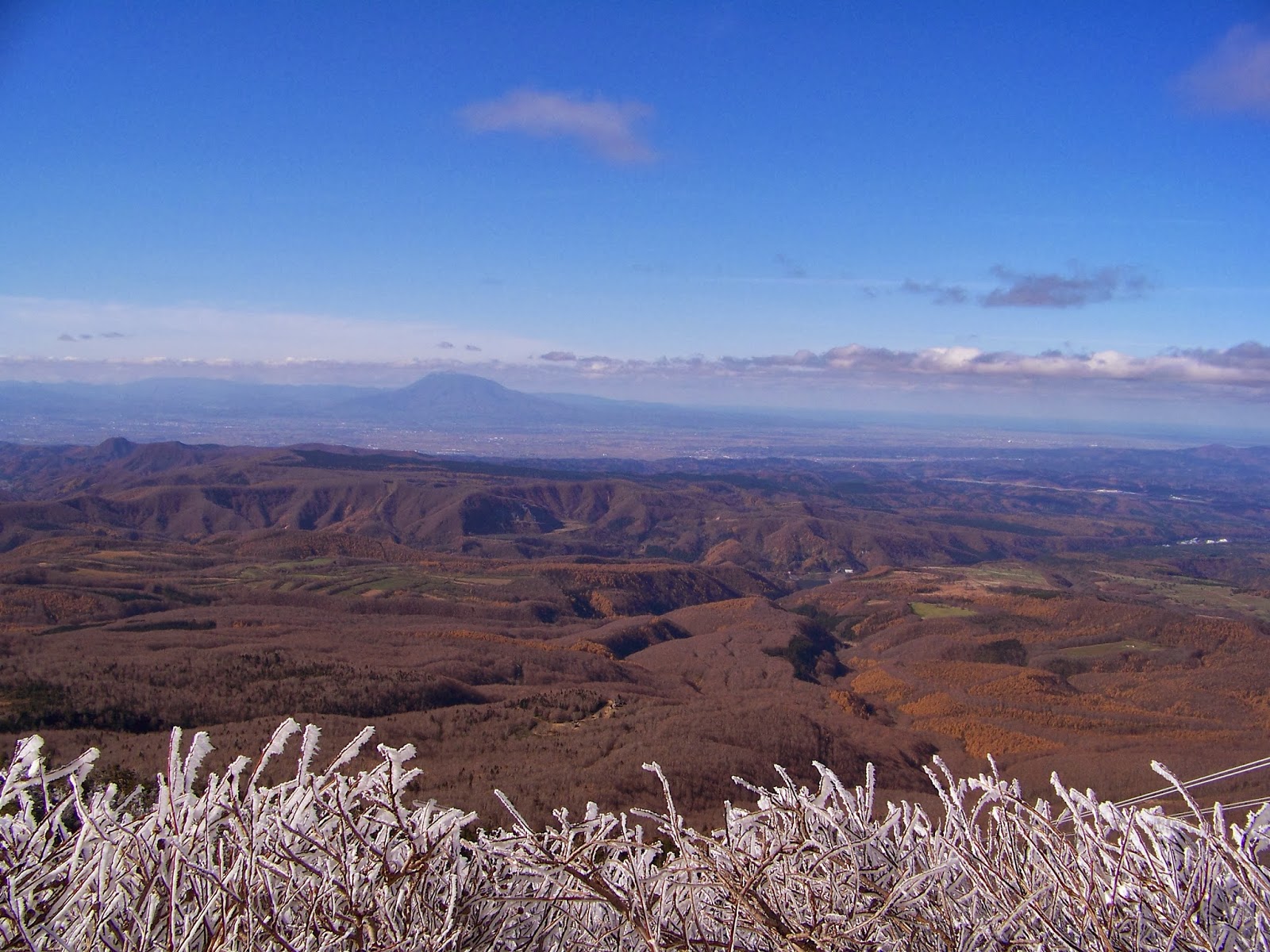
We were extremely lucky to have perfectly clear weather, so the view was spectacular. The entirety of Aomori Bay was visible from the top, and you could see west to Iwaki-san and Hirosaki, northwest to the mountains around Sotogahama, east to Rokkasho and Misawa, and northeast all the way to Mutsu! Being able to see as far as a 3-hour drive was breathtaking. That's like being able to see Mexico from Los Angeles! We could even see the faint outlines of mountains across the strait in Hokkaido!

West to Hirosaki and Iwaki-san

North to Aomori City and Aomori Bay

Northeast to the Mutsu, with Rokkasho and Misawa on the right

As we walked through the evergreen trees, the guide explained that since Aomori is so cold, we don't have to climb very high to reach an alpine ecosystem. Up here, only one tree, the Aomori fir, can survive the cold winters. The leaves on the branches are shaped like brush bristles, perfect for collecting snow and packing it into a protective igloo to shelter the tree from arctic winds. Meanwhile, the smaller flowering swamp shrub are popular among hikers in the spring and summer, but get absolutely buried in meters of snow during the winter. We strolled down the shorter "30-minute" path and enjoyed the scenery around us, but there are longer paths to see as well. Apparently, it was -3 C at the time, but the weather was so nice that it didn't feel nearly that cold.

Just gathers all the fluffy goodness!
We headed back down the mountain and returned to our bus to head back northwards toward the city. We stopped by Moya Hills to have a massive soba assortment lunch, and we looked at the beautiful fall landscape out the wide glass windows. I pointed out the Hills Thunder track to the other participants, although it seems like they already ceased operation for the winter. My need for speed will need to wait another year, I suppose.

Our next stop was in the neighborhood of Yokouchi at the very outskirts of Aomori City proper. We went down a small road that passed some dilapidated buildings and parked in an empty lot in the woods underneath the elevated bullet train tracks. Next to the lot was a small eatery with a sign "out of business". On a single sign was written "Nebuta no Sato", which pointed down an empty pathway.

As we strolled down the path through the trees and by a small brook, we heard the faint distant sound of flutes and drums. It was the music of the Nebuta Festival, which brought back many memories. Some of the other participants weren't familiar with the Nebuta Festival because they had arrived after it ended. I asked if they knew how to "jump", and then pranced around foolishly on the path to show them how (I'm fairly certain the tour organizer took a video of it).

We ended up at a couple lodge-like wooden buildings and a metal gate. Several guides came out and showed us some old pictures of Nebuta floats of bygone eras, as well as some paintings that were used as the basis for Nebuta construction. I had been to Wa-Rasse Nebuta Museum in downtown already, so I wasn't particularly impressed. We picked up our tickets and headed through the metal gate.


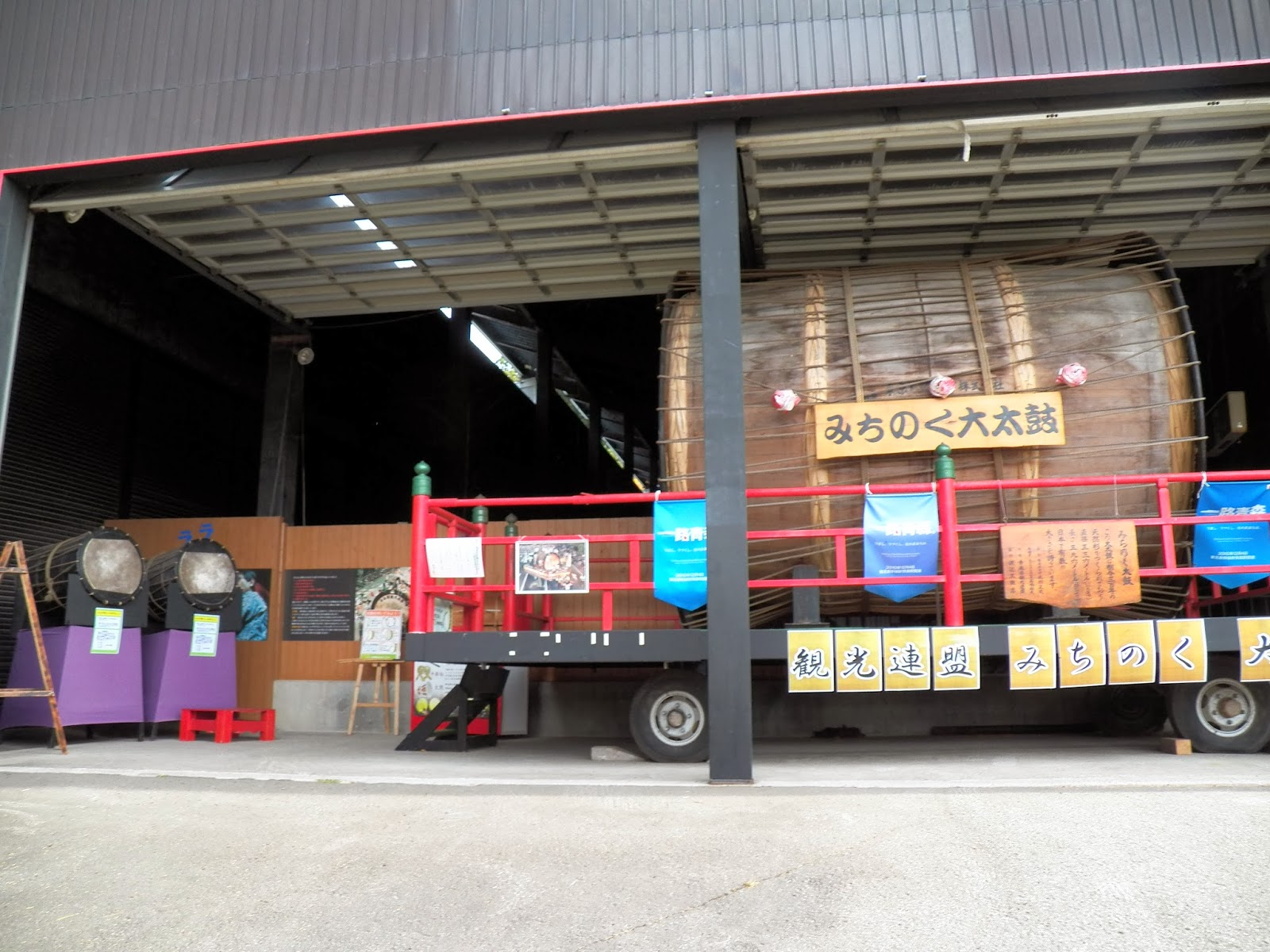
We walked up a steep slope to something that looked like a warehouse. Parked in front was a familiar sight: the 2-story high taiko drum that is the centerpiece of the Nebuta Festival. I marveled at the size of it, and told the guides I wanted to play it. They smiled and vaguely said, "That's great!" They then led us into the warehouse, where they store a bunch of winning Nebuta from over the years. Some of them were a bit dilapidated, but that's no surprise considering they're older than I am.


They brought us through the long cold building, which opened up to a huge warehouse the size of a hanger. Inside stood a huge bust from the top of a Goshogawara Tachineputa, along with a Hirosaki Neputa in the other corner. We wandered through a few more old Nebuta before they sat us down in the crafts section.

Being enlightened with the Goshogawara Tachineputa

They told us that children can make small goldfish nebuta lanterns here, but that it takes several hours and we didn't have time. I was disappointed, until they wheeled out a large wooden and wire structure. It was the bare frame of a miniature version of a nebuta float, and they handed out sheets of tough paper and cups of paste. They demonstrated how to form and cut the paper, and how to glue it on the frame. They told us to find one spot and fill it in. We were all having too much fun to stop, so we continued until we ran out of paper.

After they dragged the nebuta frame out of our hands, the led us up to a stage with some taiko drums. They also brought out a few flutes and cymbals for us to play. They taught us the rhythm, and we had a few musical sessions, stopping only to switch instruments with other people.

When we were finished, we got off the stage and sat in the seats facing a large open area. Another tour bus with Taiwanese tourists had arrived, so they sat down in the rows beside us. The guides then pointed to one of the Nebuta floats and said, "We are going to move that." Holy cow, really?!? That's awesome! "It takes at least 20 people to move it, so we're going to need some helping hands." They told us where to stand and how to hold the giant wooden guide bar, and we were off!

One we'd maneuvered it into place, we stepped out from underneath and made a circle to practice the Nebuta "jumping". A young lady dressed in Nebuta traditional garb led us in the dance, while the other guides played music. At the end, we pushed the float back to its parking spot and started to depart the building.

As we gathered at the entrance again, the guides pointed to the huge drum again and said, "Now, we will let you play the giant taiko!" Hell yes!!!!!! We all jostled for position to play the drum, but I clamored up first. I gave it a hard double thwack, and the deep rumble reverberated through the valley. Kristin joined next to me, and we played the authentic Nebuta beat with the guides on flutes and cymbals. Everyone eventually had their turn before we left and headed home.


Compared to Wa-Rasse, Nebuta no Sato is far out of the way and situated in the wilderness instead of downtown. It's big, cold, empty, filled with bugs, and a bit run-down, but I thought it was a lot more fun because of all the things to do rather than just see. The extra friendly staff there made us very comfortable as well. If you decide to visit Aomori and can't come during the Nebuta Festival, Nebuta no Sato is the place to go to experience the festival vibe and activities. You'll even get to do things you wouldn't be able to do during the real festival, like experience constructing a nebuta or being a taiko player! I would go visit again just to play the giant taiko one more time!

**UPDATE: Nebuta no Sato is now CLOSED! Only a few weeks after we visited, Nebuta no Sato closed up shop, and all the floats were moved to a different location. It's really unfortunate because there is no better or more authentic taste of the Nebuta festival outside of the week it actually takes place. Oh well...


先週末、我は留学生たちと一生に八甲田山とねぶたの里へ行くチャンスがあった。

「八甲田山」と言われますが、岩木山みたいなひとつの山ではなくて八つの火山岳です。 冬になれば八甲田山はスノーボードとスキーの自然パウダー天国になる。

スキーリゾートはあるんだけど、リフトが小さくてひとつだけで 、真剣キー選手は八甲田ロープウエイに乗ります。スノースポーツのにまだ早いですから、暖かい季節ならばロープウエイの乗客はハイカーや見物人ばかりです。ロープウエイ降りてからウインターワンダーランドの冬の景色!

その日運が良くて空に雲がひとつもなかった。弘前、岩木山、六ヶ所、むつ市も、すごく遠いところまで見えました!

「青森はとても寒いので、そんなに高くなく上っってもアルパインの植物を見ることができます」とガイドさんが説明してくれました。そして、この高さに木のひとつの種類だけが残っています。その木は「青森松」と呼ばれてます。その松の葉っぱはブラシのようですから、雪がどんどん集まってスノーモンスターになってしまいます。その雪の塊が木を寒い風に守るから割れない。

 バスに戻ってから、モヤヒルズで昼食しました。そのあと、次のところに行きました。

青森市に南側、横内という所にねぶたの里という場所に到着。 森の中に新幹線の鉄道の下に駐車しました。人もいない歩道に歩けば歩くほどとても懐かしい音を聞こえました。あの音はねぶた祭りの笛と太鼓だ!

まず、たくさんの写真や絵をみました。モノクロの昔のねぶたの写真もあったし、ねぶたをデザインするための絵も見ました。その後ねぶたの家に入って本物ねぶたも見ました。「ねぶたの家ワラッセ」にもねぶたがありますが、ねぶたの里にはとても古いねぶたもありました。ひとつふたつ少しボロボロになったが、私より古いのでそれは当然でしょう。五所川原の立ちねぷたも弘前のねぷたもありましたよ。

ねぶたの家を通ってから工作セクションに着きました。子供がいれば、そこで小さい金魚ねぶたを作ることができます。我々はもっと大きなねぶたフレームに紙を張りました。その後ステージに上がって色んなねぶた楽器もプレイしてみました。その後、ねぶたの運行体験したり、ダンス踊ったり、大太鼓たたいたりしました。めっちゃ楽しかったです!私もう二回ねぶた祭りに参加しましたが、こんな体験は初めてです。ねぶたの里おすすめです!