Sunday, December 14, 2014

Tsugaru Dirt, Sand, and Glass

Now that I've finished taking the JLPT test, I finally have time to write about my most recent adventure deep into the Tsugaru area.
日本語能力試験が終わったので、やっと最近の津軽遠足のことに書けるようになりました!

We started our day in our very own Aomori City. We headed west, crossing Bay Bridge and pulling up to a factory beneath an overpass. Inside, we were introduced to something called "Tsugaru Vidro." Tsugaru Vidro is a local glass-making craft. I didn't know it at the time, but "vidro" is actually Portuguese for "glass."
最初、わが青森のガラス工房に見学しました。ショールームに入って「津軽ビードロ」のことに紹介されました。知らなかったけど、ポルトガル語でガラスは「ビードロ」と呼ぶんだよ!

Inside the showroom
A unique feature of Tsugaru Vidro is the incorporation of color into their works. They start out with a solid color base material, and then apply shards of colored glass to create patterns. The result is mesmerizing to say the least.
津軽ビードロの独特は色です。ベースのガラスに色のガラス破片をつけてパターンができます。その結果はマジですごい!

An example of Tsugaru Vidro, inspired by Hirosaki cherry blossoms.
This company's glass didn't start out beautiful and artistic. Hokuyo Glass (known as Double-F Glass internationally) used to make glass fishing buoys out of the sand out west in Ajigasawa. The glass was tinted a light green from the various impurities usually found in natural sand. After plastic buoys began to replace these glass ones, the company started making household glassware.
ずっとこんなアートのガラスを作ったわけではない。北洋硝子は最初から漁業のガラス品を作る会社でした。鯵ヶ沢の砂を使ってすごし緑色のガラスを作っていた。だが、ガラス品の代わりにプラスチックの品物を使ってきてから、この会社が日用品のガラスを作ることになりました。

Notice the making for Hoku (北) in the center. Flipped upside-down, the marking looks like the letter "F" mirrored.
We took a tour though the workshop. Workers were blowing, molding, grinding, sanding, and tempering away. It was near freezing temperature outside, but the inside was toasty like a summer day.
工房の見学をしました。外は零度に近いですが、奥のほうはまるで夏のようだ。職人たちの手早い動きを見たら、「ガラスを作るのはたいしたもんじゃない」 と思っちゃいますが、それは大間違いです。

After the tour, they let us try to make some glass tumblers ourselves. They were trying to demonstrate how difficult it is to make a good piece of glass, so naturally they didn't explain what we needed to do. We flailed about following the very cursory instructions of the craftsman. 
ツアーが終わってから、自分もガラスを作らせてくれたのです。特に説明してくれなかったから失敗することは当たり前なんですけど、やはり得意な職人しか良いガラス品を作れないのわかりました。

Thumbs up for "acceptable!"
Once we finished, we were hungry. We rode a bus deep southwest to the small town of Oowani Onsen, tucked just underneath Hirosaki City. Oowani, which means "big crocodile," is famous for its hot springs and ski resort. Strangely enough, there are no crocs here, save for this one:
ガラス工房をでて、おなかがすいてきました。西南のほうにバスに乗って、弘前市に南側の大鰐温泉に着きました。大鰐町の名物は温泉とスキー場なんだけど、鰐でないのは不思議だにゃ~。

Kristin holding her Oowani.
Apparently, Oowani Onsen is also famous for growing something called Oowani Onsen Moyashi. These bean sprouts are long, skinny, and supple in texture. Its attributes are most accentuated when used to make their popular "Umaka-don," which can be found at the main tourist building, "Wani-come."
名物は他にあると始めて知りました。大鰐温泉もやしと言うもやしが長くて細くて感触も違う。大鰐温泉もやしが使われている料理と考えれば、一番目立つのは「ウマカ丼」です。鰐Comeの中のレストランに食べられます。

Umaka-doooooon!
We ate up our delicious meal and went out to see how the main ingredient was grown, which is the same way it's been grown since the Edo period 400 years ago. We all stepped into a long shed. Long trenches were dug into the ground, and pipes running hot spring water passed through them. This spring water keeps the ground warm and is what causes the bean sprouts' amazing growth.
ご馳走してから、その温泉もやしをどうやってそんな形で植えるか見に行きました。400年前の江戸時代と同じように植えていたそうです。光がない温室に溝があり、温水のパイプも地下にあります。温水の熱のおかげで冬でも土の温度が高くて、もやしがのびのび伸びる!


After the soybeans or buckwheat grains are planted, the trenches are covered with bales of rice straw to keep in the heat and absorb excess moisture. After only a week, the bean sprouts reach 40-50 cm in height!
植えた大豆、またはそば、の上に稲わらをいっぱい重ねます。熱を囲むため、そして水蒸気を吸い込むために必要だといわれます。たっだ一週間後、もう40-50cm伸びます!

Bales and bales of rice straw.
Here they come! These are still a day away from harvest.
 Once they've reached desired length, the growers harvest through a technique best described as "hugging it out." Since moyashi doesn't keep very long, the crop is then ready for sale at markets the very same morning.
その長さでもう刈り入れタイムだ。長いもやしを出す技は簡単に言うと「抱っこ」に似てるでしょうね。そやしはもやしなので、長く持たないからすぐ当日の朝に市販する。

Our day ended early, so we headed back to Wani-come to soak in the hot springs for a bit. The outdoor bath was really nice, especially in the cold rain. The close proximity to the women's bath means you can hear your travel companions talking over the fence. I joked to the other boys that several well placed benches along the fence line could allow us a peek. They didn't seem to have the same sense of humor as me.
旅がもう終わっている所だったので、鰐Comeに戻ってお風呂に入りました。寒い雨天に露天風呂が最高でした。女性の風呂が女子の仲間の声を聞こえるくらいに近くて、男性のメンバーに「あのベンチに立てばちらっと見えるだろうな」と冗談を申した。僕の皮肉を聞き取れなかったみたいんで、「君、最悪」と返事してくれました。以上。

That's all for this time! I'll be traveling during winter break, so maybe I'll have a post up about it next month. However, I haven't even managed to post about last winter break yet, so we'll see how that goes.

Tuesday, September 9, 2014

Pilgrimmage to Sai Village and Hotokegaura 青森県佐井村と仏ヶ浦への探検

(和文は英文の下)

On Saturday, I went on the LONGEST day trip EVER traveling to and from the most inaccessible place in Aomori Prefecture, Sai Village in Shimokita Peninsula.


Shimokita Peninsula(下北半島 - Shimokita hantou) is the Northeast region of Aomori Prefecture. It is often called "the hatchet" because of its distinctive shape. It is arguably one of the most rural places left in mainland Japan because of its inconvenient location and mountainous terrain. While it is most famous for a sulfuric volcanic landscape called Osorezan (恐山- "Fearful Mountain") and the big tuna fishing town called Ooma (大間), we did not visit those locations that day. For the story on those places, see here.

This time, we went even deeper into the wilderness of Shimokita to a place called Sai Village(佐井村 - Sai mura). It is located along the blade of "the hatchet" and can only be accessed through steep mountain roads or by small ferry boat.


First, we arrived in Kanita (蟹田 - "Crab Field") on the Eastern coast of Tsugaru Peninsula. The organizers had planned to take the Mutsuwan Ferry from Kanita to Wakinosawa (脇ノ沢 - "Pit Swamp") at the southern tip of the hatchet blade to avoid driving around the entirety of Mutsu Bay. Sadly, it was much more expensive than driving and only saved us about an hour on the road.

While we waited for the ferry to depart, we climbed the tall "Topmast" observation tower and got a great panoramic view of the bay and the surrounding coastline. The observation deck's floor is made of steel grates, so you can see all the way down to the bottom. Some of the other travelers were afraid of heights, so they tiptoed around on the concrete borders surrounding the metal grates.

The Topmast
Don't fail me now, steel grates.
The view from the top.

After we arrived in Wakinosawa, I was surprised that we still couldn't drive directly to Sai Village. The road that runs along the blade of the hatchet is treacherously steep and narrow, so the bus driver didn't want to risk passing through. Instead, we look a long detour through the mountains, arriving in Sai Village at around noon. Everyone was tired and hungry, and our day had yet to even begin. We had a small lunch at a restaurant in the tourism building, called ALSAS. I found the welcome sign particularly interesting.

Nothin' like a dead bear greeting you at the door.

After lunch, we got a tour of the village. Since we were low on time, they took us to the 3 largest landmarks. The first was the preserved house of a famous local doctor, Mikami Gotaro (三上剛太郎先生). He had served as a medic in the Russo-Japanese War and was famous for saving the lives of more than 70 people in a particular incident. Surrounded by Russian troops, Mikami patched together a red cross flag using bandages and pieces of a red blanket. Upon seeing the flag, the Russian troops didn't attack, and Mikami was able to treat the wounded of both the Japanese and Russian sides.


Next, we went to visit the Hachimangu Shrine (八幡宮)at the top of a hill. The shrine itself is more than 300 years old, but the site it was built on has an even longer history. Strewn around the shrine grounds are many arrowheads that date all the way back to the Jomon period (14,000 - 300 BC!) and were used by the first human civilization to inhabit the islands of Japan. This history give the shrine its nickname, Yanonemori (箭根森 - "Forest of Arrows")


Finally, we paid a visit to an old Buddhist temple. Inside, there were relics from all around Japan and Europe, which were collected by the wealthy owner of the shrine. Apparently, the temple had burned down once before, but the owner was so wealthy that he paid for its reconstruction entirely out of his own pocket.

As the tour came to an end, we found out why they didn't feed us very much for lunch. We were going to board a small boat, the "Sai-light"(サイライト), and take a ride to Hotokegaura(仏ヶ浦). This day was particularly windy, and the waves were choppy. As I stepped into the boat, I immediately regretted it.

Behold, the sketchiest boat to ever sail the Bay of Aomori.
The captain told us that the ride would be similar to a roller coaster, but I didn't believe him until we left the harbor. We were getting battered from all sides by big waves, and we managed to fly into the air several times before crashing back down. The ride was so turbulent that the video being played on the boat's television screens would periodically pause and skip. We hit a particularly big wave, causing the girl next to me to empty her entire can of iced coffee into the air, which then rained back down all over me. It was fun and games at first, but the comedy wore off when we realized the ride would last another half hour.

Halfway through, I looked to my right to see a girl emptying her stomach into a clear plastic bag, filling it to the brim. I looked behind her, and my girlfriend was also keeled over trying to keep her lunch in. The passengers on her side were passing plastic bags back and forth in an attempted containment. I suddenly felt thankful that I only had to deal with splashing coffee. I was also amazed at how my stomach was handling such a violent ride so well.

After an excruciatingly longest 30 minutes, we finally docked at Hotokegaura and disembarked. My girlfriend sat down and stared blankly at the shore. I ushered her forward because we only had half an hour to explore the incredible coastline.

Kristin pretending to be fine
And what a coastline it was! The erosion of the limestone along Hotokegaura left tall white spires in all kinds of interesting shapes. I walked around and snapped photos as the guide described what each spire looked like and compared it to some sort of animal or person. Many people believe that these spires represent gods that look out at the sea and protect sailors from harm.


As our 30 minutes came to an end, the passengers gathered around the boat and grudgingly stepped aboard again. While the ride back was not quite as bad as before, it was still enough to make Kristin double over with nausea once more. After returning to Sai Village, we had a short chat with the owner of the ferry service. He told us that the ocean is usually very calm and the ride is very comfortable. That day was just the worst day to be riding on the boat. Some friends that visited on a different day confirmed that the ride is smooth.

With the rough day behind us, we departed towards Aomori City. We didn't take the ferry route back,  instead decided to drive through the handle of the hatchet to return home. As expected, it was a long 3-hour journey, but we got to stop at one of our favorite handmade tofu shops called Yuusuitei (湧水亭)along the way to grab some tofu donuts, soy yogurt, soy milk, and gourmet black-bean natto.

Mmm, my favorite natto ever!

All in all, it was a VERY long trip, but also very satisfying. Thanks for reading, and don't miss the next trip!

土曜日に一番長い国際交流会観光の旅をした。朝8時から夜8時までずっと青森の一番険しい「下北半島」と言う所まで日帰りをしてました。

下北半島は青森県の東北にあります。形は斧と同じなので、外国人に「ザーハチェット」と呼ばれています。本州に最後残ってい る正真正銘の「田舎」の所かもしれない。下北半島の有名な所は地獄みたいな恐山とマグロの大間町なんだけど、その日は行きませんでした。前の旅行の詳しく はこちら。(英語のみ)

今回、もう少し自然に落ち込んで「佐井村」まで行きました。ハチェットの刃先にあるところで、行く方法は山道運転か小さいフェリーです。

まず、津軽半島にある「蟹田」に着きました。むつ湾を回らなくてまっすぐむつ湾フェリーでまっすぐ刃先にある「脇野沢」に行くことにしました。残念ながらフェリーが運転より一時間だけ早くて、ガス代よりずっと高い方法です。

フェリー出発を待っていた間、「TOPMAST」と言う展望台に登って青森湾のきれいな景色を見ました。足の下は全部スチール網なので、かなりドキドキな経験でした。高所恐怖症がある参加者が網の周りのコンクリート部分だけに歩いていた。

フェリーに乗って脇野沢に着き、まだまっすぐ佐井村までいけないと聞いたらびっくりしました。刃先に海のそばの道路はとても狭くて険しくてバスで通るのは 危険だそうです。代わりに、山道に通って昼に佐井村に着きました。皆さんはもう疲れてきて、おなかも空いてきました。佐井村役場津軽海峡文化間「アルサ ス」の中のレストランで昼食をいただきました。挨拶のサインは特に面白かった。

昼食後、佐井村の歴史案内されました。あまり時間なかったので有名な3つの所だけつれてくれました。まず、有名な医師、三上剛太郎、の家を見ました。日露戦争に70人以上の命が三上先生のおかげで救われたと聞きました。赤十字の仕事もいっぱいできた見たいです。

次、八幡宮「はちまんぐう」神社に行きました。神社のほうは300年以上の歴史がありますが、その土地がもっと長い歴史があります。縄文時代の矢の根が散り敷いていて、ガイドさんが一個探して見せました。昔、近所の子供達がこの矢の根を狩りましたが、今はこんな歴史がある土地を守らないとだめって教えてくれました。

ツアーの最後にお寺を見に行きました。前、火事があってお寺が全滅でしたが、大金持ちの一人だけのお金で立て直しました。中身にいっぱい日本と海外の宝物があるそうです。

町案内終わってから、船を乗る時間になりました。船の名は「サイライト」で、小さい船でした。その日は特に風が強くて波も高かった。船の中に入るとすぐ後悔しました。

ジェットコースターに用に揺れると船長さんに教えられたが、港を出た前には信じなかった。船があっちこっち激しく揺れて、空に飛び出すこともあった。テレ ビに映していたビデオも時々止まっていた。特に高いジャンプのとき、隣の人の缶コーヒーの中身が飛び出して、茶色い雨が振り掛けられました。最初はこんな クレイジーな経験がありえなくて、あほみたいに大笑いしていたけど、現実に戻ったら後30分乗らなくてはいけないと気づいた。

15分後、右側に向くとある女性がプラスチック袋におなかの中身を出していた。「袋いっぱいだな。すげ~」と思っていた。その子の後ろに彼女のクリスティ ンが吐かないようにくの字に曲げていた。そこらへんの乗客がプラスチック袋をたくさん別ち与えた。自分は「コーヒー雨の問題だけでよかった」 とありがたく感じました。自分のおなかが意外と平気で、びっくりしました。

歴史に一番長い30分が終わってから、やっと仏ヶ浦に着いて船に降りました。クリスティンがドックに座ってぼうっとしました。30分観光時間しかなかったので彼女を引っ張って進みました。

でも、仏ヶ浦ってなんときれいな所です!高くて白い岩があって、色々な形ありました。ガイドさんが岩の形の名前を説明してくれました。その岩が海を見守っている神様だと教えました。

30分が終わってまた船に乗り時間になりました。いやな顔で船に入って、もう一度トラウマの経験でした。帰り道のほうが静かだったけどまだ激しかった。そしてクリスティンの吐き気も戻りました。佐井村に着き、船の会社の社長とお話しました。普通は津軽海峡はとても静かなんですけど、その日は最低な状況でした。やっぱり運が悪かったね。

話が終わり、帰る時間になりました。フェリーに乗らずにずっとバスで帰りました。3時間以上かかりましたが、途中で横浜町にある大好きな豆腐屋さん「湧水亭」に止まって豆腐ドーナツ、ヨーグルト、豆乳、そして黒豆納豆を手に入れた!とても長い旅でしたが、やってよかった!

Wednesday, August 27, 2014

Green Park Hotel Review

「日本語は下の方」
 
We started out last weekend's International Exchange event by reviewing a local business hotel. It was a bit random and out-of-the-blue, but I suppose it was something obligatory or a formality.

Green Park Hotel is a a business hotel located in Honcho in the heart of Aomori City. It's a very obvious building because the whole thing is painted an algae-green color. It's near all the important places like the city office, prefectural office, and Shinmachi, and it's only a 5 minute taxi ride from Aomori Station and ASPAM. Location-wise, it's fairly good, but the neighborhood it sits in is fairly dark and shady.


The hotel manager explained to us that foreign travelers, especially from the United States, have been visiting Aomori in greater numbers than ever before. They've also begun to stay in lower-priced accommodations like guest houses or business hotels. To better serve the foreign visitors, they wanted our opinion.

My first impression of the place was, "Well, it looks and feels like a normal business hotel." Nothing in particular stood out, except for how nice the public bathrooms downstairs were. The building isn't particularly new, nor is it particularly large. The rooms were small and had no view out the window whatsoever, but they were very clean, quiet, and comfortable. All in all, it felt the way a business hotel should.


For a foreign visitor who doesn't speak Japanese, I can imagine staying in these northern wastes of Japan is difficult. English ability is very limited, and translations are hardly ever provided. The clerks at the counter of Green Park Hotel spoke a fair amount of slow English, which I found (pretended to find) very helpful. They also had a decent amount of fairly accurate English translations on their guides and pamphlets, although it would still be better to have more. I found that the only perfectly written piece of English was the Asahi Beer advertisement.

So close! But at least it's understandable...
Suddenly, perfect English.
One thing we found particularly funny were the "adult programming" pamphlets. "Yeah, this is definitely lodging meant for businessmen traveling alone," we collectively thought. It was also interesting how the cover was written mostly in English, yet the contents are exclusively Japanese. What a tease!

OMG adult programming in English!
Just kidding, it's all Japanese. At least there are pictures!


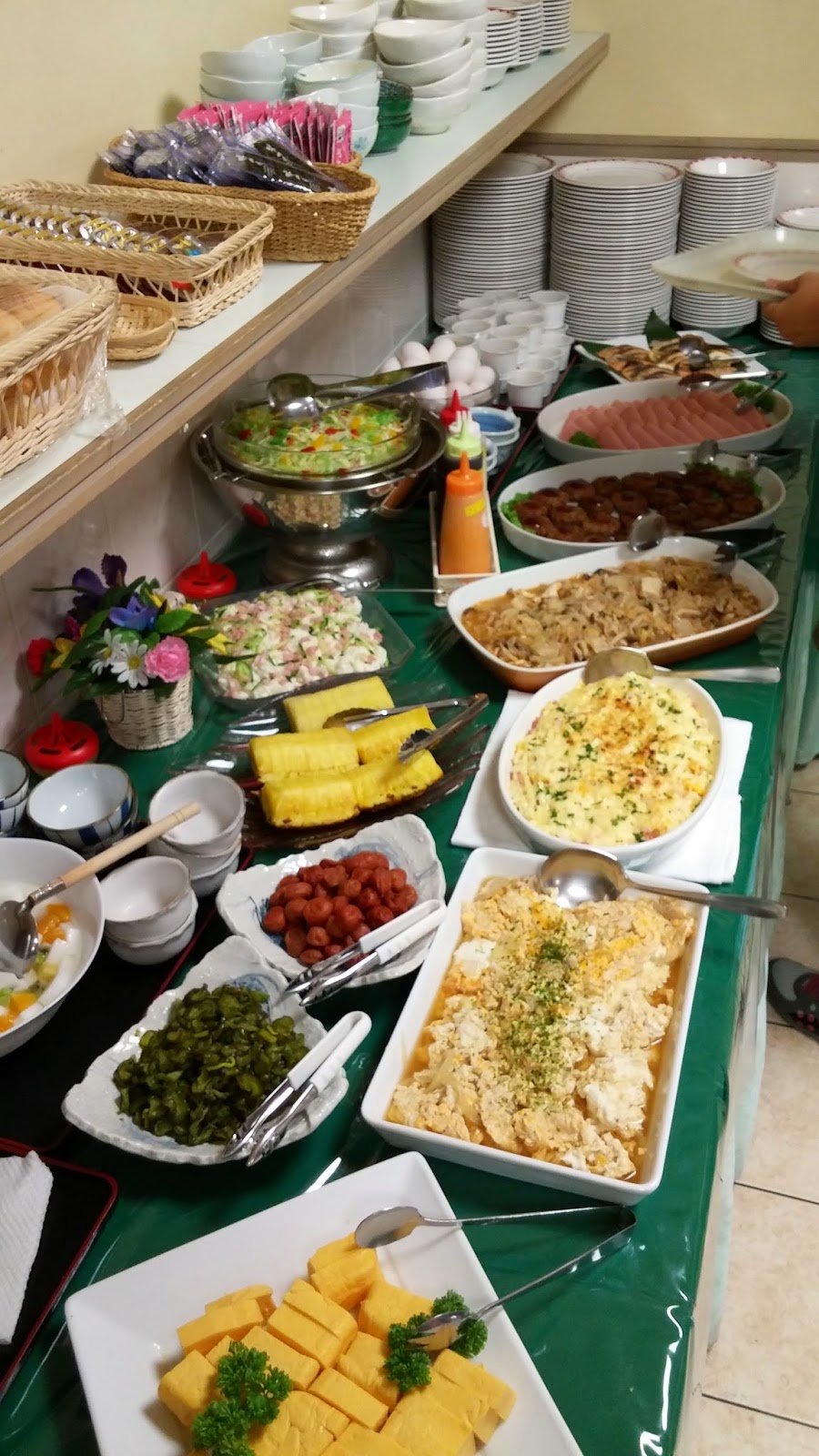
Finally, we were allowed to partake in their breakfast buffet. It was already lunchtime, but nobody was complaining! Their selection was particularly good, and the taste was nothing to be ashamed of. For a mere 500 yen, I thought it was a great deal.

Japanese food, pseudo-Western food, they've got it all.
In conclusion, this business hotel was basically what you'd expect from a business hotel. Just enough to be clean, safe, and comfortable, for cheaper than a conventional hotel. I'm not sure what exactly made it different from any other one, but I enjoyed the breakfast buffet.


今回の国際交流フェアの始まりは青森市内のビジネスホテル体験でした。少しいきなりだったけど、交流員の義務だと思っていました。

グリーンパークホテルは青森市本町にあります。スピルリナグリーンの色なのでとても目立ちます。近くに市役所、県庁、新町がありますし、駅からタクシーで5分だけかかります。周りの近所は少し暗いけど、ロケーションはいいです。


最近、青森に来る外国の観光者が増えているみたいで、その観光者がゲストハウス、ビジネスホテルみたいな宿に泊まっているそおです。なので、我ら外国人の意見を聞きたがるとマネージャーに聞いてました。

最初入店した時、「まあ、普通のビジネスホテルだな」と思いました。一回のトイレはとてもモダンでよかったですが、他のところが特に何も目立ちませんでした。建物はあまり新しくないし、部屋も思う通りのシングルサイズだったし、窓から景色なんてなかったです。だけど部屋はきれいで、静かで、あずましい感じでした。全てはビジネスホテル通りでした。

日本語を喋らない外国人の立場で、ここ田舎の青森へ旅をするのは大変です。英語で喋ってくれる人が少ないし、英語に翻訳した説明は少ない。ですが、グリーンパークホテルは国際化のことを頑張っているみたいです。カウンターの人が分かりやすく英語で部屋案内してくれました。部屋の中にインフォメーションガイドも英語で書いてあります。間違いもありましたが、それでも分かりましたので安心でした。ロビーにアサヒビールのバナーはたっだひとつの完璧な英語の作文でした。

もうひとつ面白いもの見つけました。エロチャンネルのパンフレットを見かけて、「ここやはり一人旅のビジネスマンの部屋ですよね~」と思ってしまいました。カバーの方はほとんど英語でしたが、チラッと中身を見ると残念ながら全て日本語でした。なんとガッカリ!でも絵がたくさんありましたから十分かな~

最後は朝食バイキングを食べさせてもらいました。種類が多くて普通の朝食バイキングよりセレクションがある。味もなかなか美味しいと思いました。500円でバイキングが特に安い!

他のビジネスホテルに比べて、グリーンパークホテルはいい方です。値段は少し高いんですが、割引もあるのでもっと安く泊まることができます。いいことは特に朝食バイキングでした。


Scalloping in Mutsu Bay

When you think of products that come from Aomori, the two things that come to mind are apples and scallops (called hotate in Japanese). The afternoon portion of last week's reporting tour took place in Noheji, a town about an hour east of Aomori City. It sits on the very southern coast of Mutsu Bay, where the majority of Aomori's (and Japan's) scallops come from.

The scallop, a tasty little mollusk!

Anatomy of a scallop. Everything but the dark digestive gland is edible.

We arrived at a small building labelled JF, which is the local fishery organization. There, we met two fishing boat captains and their crew, who then ushered us onto their boats. We happened to arrive during the local summer festival, so one of the ships was still adorned with the bright flags displayed during the boat parade.


We boated out into the open sea of Mutsu bay for about 5 minutes before stopping in front a of a field of floats and buoys. The captain and crew explained that they were markers for the scallop lines, which is where the scallops are hung and farmed. I was under the impression that we were going to be catching wild scallops from the sea floor, but apparently it's much more complicated than that.

The captain explained the basic life cycle of a scallop. They start out as little tiny transparent larvae, which fall to the sea floor and slowly grow larger and more opaque with time. The farmers nurture these teeny tiny scallops in mesh bags into their adolescence.

Baby scallop on the left, more mature scallop on the right.
Baby scallops in their mesh bag.
When they get big enough, they have a hole drilled into the bottom corner of their shell and have a string attached to them. They're then hung onto a 10 meter rope, which are then placed into the bay. The captain said that placing them too deep would make them susceptible to predators, like rays or starfish, lurking on the sea floor. Meanwhile, the surface of the ocean is too choppy for the scallops to gather their main food source, plankton.

The hotate life cycle and farming process.

In Mutsu Bay, scallops are farmed both from hanging on ropes and more naturally on the sea bed. We wanted to see the farming methods themselves, but since it was festival season, fishing was prohibited and we didn't actually get to see anything. However, as a consolation, the captains gave us all a big box full of scallops to take home, and then set up a big scallop barbecue for us to enjoy!


At the barbecue, the fisherman taught us how to open the scallops with a special spade-like tool and how to prepare it. Of course, you can eat the abductor muscle and mantle portions as sashimi straight out of the shell. You can also throw them onto a grill and cook them in their own shells.


Grilling in the shell, called kaiyaki.
Mmm, yummy!
With that, we all went home with a big box of fresh scallops to eat for the next several days. I've been eating scallops for the last three nights, and now I'm craving some red meat! See you again!


青森の名物と言えば、2つの物が考えられます:林檎とホタテ。先週の交流会の午後部分は野辺地「のへじ」と言う所で行いました。野辺地町は青森市から車で一時間かかって、むつ湾の南湾岸にあります。
JFと書いてある小さい建物に着きました。船長の二人に船に案内されて乗りました。夏祭りの途中でしたので、派手な旗が立っていた。
 
むつ湾に5分船を乗って、浮きがいっぱいの所に止まりました。このブイはホタテが着いているロープのマーカーと船長に聞きました。私がホタテを狩るとか釣ると思ったんですが、実はホタテはそれより複雑です。

ホタテの赤ちゃんは小さくてクリアーなラーバです。もっと大きくなるまで、たまねぎのメッシュ袋に育てます。少しずつ大きく黒くなります。

大きくなった後、ドリルを使って殻に穴を開けます。糸でホタテを10メートル長さの紐にくっつけて、湾に出します。深いところに捕食者(エイ、海星)がいっぱいいて、浅はかな所は三角波でプランクトンを食べれなくなる。
 
こんな方法で育てることがあって、もっと自然に海洋底で育てる方法もあります。もうちょっとじっくり見たかったけど、夏祭りが行って魚釣りが禁止になりました。変わりに、船長たちがホタテ取り放題をさせてくれました!それだけでなく、貝焼きパーティーもやってくれました!

BBQでホタテの調理仕方を教えてくれまして。ビデオの中の人がとても上手で簡単に一発でひもを取りました。貝焼き方も見せていただきました。うっまい!

Sunday, August 3, 2014

Energy Exploration in Rokkasho

Only a week ofter the Bunaco trip, we were set to take another one. This time, we headed out onto the Shimokita Peninsula to a town called Rokkasho. Sitting on the handle of the hatchet that is Shimokita, it is easily viewable from a distance because of its iconic wind turbines.

Shimokita is famous for it's remoteness. Some say it is one of the last truly rural parts of Japan. The low population makes it a perfect place to locate things that nobody wants to live next to. In this case, Rokkasho is home to an enormous energy industrial complex.

When I say energy, I mean a bunch of different conventional energy forms all in one place. As I mentioned before, the "hatchet handle" is dotted with hundreds of wind turbines, generating clean energy for the residents of Aomori using the strong winds that commonly gust through the narrow peninsula. Underneath the wind turbines sit solar panels that soak up the suns rays on those lucky sunny Aomori days. We stopped at a small observation deck to take a peek at the solar farm and to take pictures of the massive wind generators whirling rapidly in the strong winds.


On the drive through, we passed by a field of massive silos, each storing hundreds of thousands of gallons of crude oil in reserve in case of emergency. It's said that there is enough crude oil stored here to power Japan for 3 months in case something goes terribly wrong.

We spent a fair amount of time at a hot spring building out in the middle of nowhere. It was called Rocca-Pocca, and while it was a fairly normal large tourist and bathing building, they boasted the cutest set of mascot characters ever!

The Rocca-Pocca's six bathing cuddlies.

Finally, the most important and outstanding facility is the nuclear waste storage and remediation facility. Getting inside required a large amount of security clearance, as would be expected from any facility handling highly radioactive material. They gave us a tour around the facilities, most of which we could only look at from a distance through windows.

Nuclear Recycling Facility

The JNFL complex contains 6 facilities, 2 of which are still under construction. They have a uranium enriching plant, used to make mined uranium usable inside a reactor. The have a low-level waste disposal center, that handles and stores drums of various contaminated items, like safety equipment, tools, clothing, or liquids. There is a vitrified waste storage center that keeps the nasty fission byproducts turned into glass. There is a spent fuel storage facility, which keeps spent or partially spent fuel rods underwater awaiting reprocessing or reuse (this facility is currently filled to max capacity with fuel rods since Japan shut down all their nuclear reactors). There is a reprocessing plant (near completion), as mentioned before, which breaks apart used fuel rods and extracts usable fissile material. Finally, the is a MOX fuel fabrication plant (expected completion in 2017), where they plan to produce experimental "Mixed Oxide Fuel" rods out of reprocessed uranium and plutonium, which can be used similarly to standard uranium fuel rods in light water reactors. For more detailed information, visit http://www.jnfl.co.jp/. They have an English site too!

(and now for a lecture on nuclear energy production and safety)

Before we went inside the nuclear fuel reprocessing facility, one of the participants remarked, "wait, we're actually going inside there? Oh crud...," which is also when I realized that many of these participants, like most of the world's population, don't know how nuclear fission and radioactive decay work.

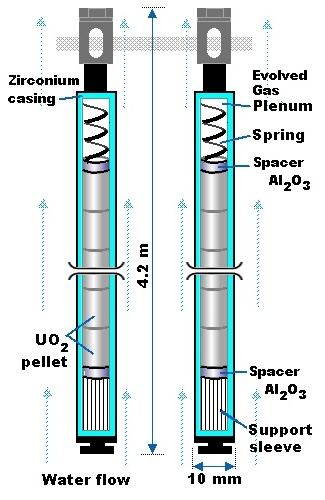
To understand how nuclear waste storage and remediation works, you must first understand what nuclear fission does and how to safely handle nuclear waste. Inside a nuclear power plant (light water reactors), there are enriched uranium ("fissile material") fuel rods. These fuel rods get blasted with neutrons, which have a chance to be absorbed by some of these fissile material atoms. If it is absorbed, the resulting atom becomes an unstable isotope. Most of the time, these unstable isotopes will undergo fission, where the heavy isotope splits into two smaller atoms (called "fission byproducts"), releasing kinetic energy, gamma rays (x-rays, essentially), beta particles (free electrons), and 2-3 more neutrons to get soaked up by other uranium or plutonium atoms and continue the fission chain reaction.  It is the massive amount of kinetic energy released, turned into heat, that provides the majority of energy used to produce electricity.


After many years in operation, the fuel rods become lean in fissile material. It is at this time that the reactors are shut down and the "spent" fuel rods are replaced with fresh ones. But what should be done with these spent fuel rods? The main concern is, what exactly in left in the spent rods?

As I mentioned before, fissile materials turn into fission byproducts when they split apart. What exactly the fission byproducts are is entirely up to probability, as a fissile material can split into combination of byproducts as long as the resulting mass is the same. Basically, what's left inside the fuel rods is a smorgasbord of various metals and gases, most of which are unstable and undergoing radioactive decay. These materials are NASTY, and you definitely don't want them getting out into the environment. This is why all fuel rods are encased in a metal "cladding" that seals all the crud inside and doesn't let any of it get out.


So hey, the fission byproducts are sealed, so there's nothing to worry about, right? Wrong! There is the problem of RADIATION. Oooooh I used a scary word. But what is radiation? Visible light is radiation. Your microwave and toaster use radiation to cook your food. The radio in your car operates on radiation. What's so scary about radiation?

Radiation itself isn't necessarily harmful. The key word you should be concerned about is "ionizing radiation". This is radiation that will fundamentally alter the atoms and molecules inside your body, and can therefore cause cell and DNA damage, the scariest of which would lead to massive cell death or malignant cancer. You don't want ionizing radiation traveling through your body. This type of radiation comes in 3 forms: alpha particles, beta particles, and gamma rays.


Alpha particles, essentially a Helium nucleus with no electrons, can be pretty nasty because they go around stealing electrons from other atoms they come into contact with. We tend not to care much about them because they are large enough to collide into other matter and can't travel very far. If one of these particles did get far enough to hit you, it would stop before it even made it past your clothes or the layer of dead skin cells that surround your body. Since there's usually no contact with living tissue, alpha particles aren't dangerous unless an alpha particle emitter (such as Radon gas) is ingested or inhaled. The inside of your lungs don't have a protective layer of dead cells like your skin does, allowing alpha particles to bombard sensitive tissues.

Beta particles, on the other hand, are just free flying electrons and are much smaller than alpha particles. They are able to travel much further through matter, usually making it through several meters of air or tens of mm through human flesh. These little electrons fly through the empty space of atoms' electron clouds and slowly lose energy when it collides with nuclei. It'll eventually settle and ionize an atom, leading to fundamental changes in that atom's properties. Beta particles are a bit more scary because they can travel several meters through air. If you're standing next to a beta particle emitter (like most fission byproducts), those beta particles are showering upon you in all their carcinogenic glory several centimeters beneath your skin. However, several millimeters of aluminum is enough to stop almost all beta particles, so wearing an aluminum foil hat would actually be fairly effective at protecting your brain. The main concern again would be if you inhale or ingest a beta particle emitter. Your internal organs would be getting showered with electrons, which leads to serious microscopic (nanoscopic?) internal destruction.

Gamma rays (also called x-rays), finally, are the most dangerous of the ionizing radiation family. They have no mass and travel as pure energy, and so are even more difficult to stop than beta particles. Half of emitted gamma rays will travel through 150 meters of air or 6 cm of concrete. Lead (or plumbium) is by far the best gamma blocking substance, taking only a cm to stop half of emitted gamma rays. That's why the dentist lays a heavy lead apron on your body before taking an x-ray image. This kind of radiation is what we are terrified of, despite the fact that gamma radiation is common in normal daily life, such as medical screenings, normal cosmic radiation, emissions from the ground, and emissions from potassium (like in a banana). Yes, eating a banana irradiates you.

So now that we know what ionizing radiation is and why it's dangerous, how dangerous are spent fuel rods? Well, alpha particles weren't much of a concern to begin with because you could essentially bathe in an ocean on alpha particles with no ill effects (actually it would probably kill you, but not through radiation-caused cancer). Meanwhile, beta particles won't make it further than several meters from the fission byproducts, assuming it even gets past the cladding. The gamma rays are the things we have to worry about.

Fission byproducts, being mostly unstable elements undergoing radioactive decay, release lots of beta and gamma radiation. Nuclear safety controllers first need to ensure that the source emitting the radiation (the fission byproducts) doesn't get spread around. That's why they have cladding. Since all the nasties are contained within the fuel rods, the next step is to prevent the radiation that inevitably comes out of these fission byproducts from actually hitting anyone.

That is where the nuclear waste storage and remediation facility comes into play. First, as I said before, the fuel rods aren't EMPTY. They are simply "lean" in fissile material (uranium and plutonium). Reprocessing the fuel rods involves chopping the rods open and chemically separating the cladding, nasty fission byproducts, and still useable fissile material from each other. The reprocessed fissile material is then reused in new fuel rods, while the nasty fission byproducts become "high level nuclear waste", which spew beta and gamma radiation all over the place.

So what do they do with the high level nuclear waste? They turn it into glass! It's called "vitrification", and it reduces the volume of the nuclear waste tremendously. This allows them to pack the waste into tall steel canisters and slide them 9 high into 10m deep holes in the ground. The canisters emit a massive amount of radiation (enough to be fatal with just 10 seconds of direct exposure), so the burial ensures that any beta or gamma radiation gets soaked up by the concrete. Remember, just 60 cm of concrete is enough to reduce gamma radiation to less than 0.1%. The glass contains boron compounds as well, so any rogue neutrons get soaked up immediately. Some say that nuclear waste is a huge environmental problem, but all of the world's high level nuclear waster can be vitrified and stored safely in a facility the size of a Walmart. I'm fairly certain standard garbage landfills are much more of a concern than nuclear waste.

Vitrified waste


ブナコの観光の一週間後、下北半島の六ヶ所町に行きました。遠くから、ならではの風力タービンが見えます。

六ヶ所はとても田舎です。人が少ないのでコンビナートを建てるのにぴったりです。ここにむつ小川原工業基地があります。

いろいろなエネルギー関係の物が建ててあります。ここに風が強くて風力タービンに丁度いい所です。風力タービンのしたにソーラーパネルがあり、太陽熱発電もされたいます。

施設を通るとたくさんのものでかいサイロも見えます。これは国家石油備蓄基地です。緊急の時、ここに全国が3ヶ月使える原油が溜められているそうです。

次、森の中の観光と温泉のビルがあります。「ろっかぽっか」といいますが、その所のゆるキャラはとてもかわいい!

最後に、一番大事な目立つ所は日本原燃原子燃料サイクル施設でした。セキュリティーが大事なので入るだけでもなかなか難しかったです。バスに乗って色々な施設のツアーをしました。残念だったけどほとんどの観光は遠い所の窓の後ろからでした。

日本原燃原子燃料サイクル施設の中に6つの特別の施設があります。ウラン濃縮工場で原子燃料を作るために天然ウランのU-235を多くします。汚れた道具、服などのあまり危険じゃない放射性廃棄物は低レベル放射性廃棄物埋設センターに入っています。使われた原子燃料の中のもった危険なものがガラスにされて高レベル放射性廃棄物貯蔵管理センターに入っています。使用済燃料受入貯蔵施設でまだ使える燃料が貯蔵されている。まだ未完成な工場が二つあります。再処理工場(2014年10月竣工予定)で使われた燃料ロッドを切り壊してまだ使える物をリサイクルする。その残したものをMOX燃料工場(2017年竣工予定)で新しい燃料ロッドを作ることできます。

機械工学の専攻の僕にこの経験がとても特別でした。一生に一回だけ経験できることだったかもしねらいはらとても感謝しています。

(ほかの内容は訳せないので、できれば英語で読んでいただければどうぞお願いします)

Wednesday, July 16, 2014

Bunaco Part 2

「日本語は下のほう:」
After being in Aomori for this long, I've started running out of new things to do and have started repeating certain activities again. This time, I went BACK to Hirosaki to visit the Bunaco workshop again. For those who don't know about Bunaco, read the previous article here.

Here we are again...
This time around, it was summer, and the workshop was missing the piles of snow that were surrounding it last time. I hardly even recognized the place.

Where... is this???

As we walked inside, I saw the same lady that guided us the last time. She exclaimed, "Hey, you're back!" and I was surprised she recognized me. She didn't recognize Kristin though, and then I remembered that some Japanese people have a "white people all look alike" complex going on.

Look who it is again!

We had a short tour through the facility again, watching the workers wrap, sand, paint, and lacquer away at the various handmade pieces. The air smelled of sawdust and volatile solvents.

The sawdust gets EVERYWHERE!
We were then led to a table where we would again make our own bowls. Same as last time, we used a teacup to mold the shape of the bowl. Kristin and I tried a more difficult shape to get a different set of tableware to add to our collection. I swear I got the stiffest wound bowl out of them all, since the French girl was essentially done within 30 seconds of starting while I was cranking away with my entire body weight for half an hour.

A very nice macro shot.

After we finished, we paid another visit to the Bunaco showroom. One thing different I noticed this time around was the presence of the smooth jazz voice of Sade, played out of the recently developed Bunaco speaker system! WHAAAAA??!?!?!!?! Yeah, seriously, they made this jet-engine shaped stereo set out of Bunaco!

Where do I inject the jet fuel?
I was fascinated by their steam-punk looks and their excellent smooth sound, but I was less impressed by the name and price. I don't know if I'd rather buy a motorcycle or a pseudo-modern wooden sound system.

Would you pay $3000 for a Faggio?
We sat down for a nice long chat with the company president, who explained the various stores in Europe and America that carry his product and how the demand for style was different in different countries. Places varying from top-tier hotels in Tokyo to Starbucks cafes in Hirosaki and Aomori City all carry Bunaco products. Just as the French girl was dozing off, we called it a morning and headed back home.


青森に長くなれば、新しい経験が少なくなり、前の活動を繰り返ることもあります。今回、また弘前のブナコ工場に参りました。先のブナコ体験の詳しくはこちら

今度こそは夏であり、前の雪の大盛りがなくてまったく違う所みたいでした!

中のほうに入ったら、知り合いのお姉さんが「おぉ、二回目ですか?」と言ってくれました。僕の顔を覚えるなんてびっくりしましたが、なぜクリスチンの彼女を気づかなかったでしょう?日本人が白人の顔を区別できないでしょうか?

お姉さんが工場の案内してもらって、職員の働いている姿を感動した。木屑と溶剤の匂いをしました。

テーブルにつれてもらって、もう一度ブナコのお椀を作りました。今度少し違うもっと難しい形を作ろうとしたが、いつもより硬く回した品物を手に入れたそうです。フランスの女性が30秒で終わったけど、私が本気を出しても30分かかりました。なんかおかしいです。。。

完成したらブナコのショールームのほうに参り、少し違う雰囲気でした。スムーズジャズのシャーデーの声が聞こえて何もおかしくないが、見回ったらなんとブナコのスピーカーが!!!!!間違いなくこのジェット機エンジンの形のステレオシステムがありました!

スティームパンクのシェイプもすてきなスムーズ音にも気になりましたが、名前と値段なら気に入らないね。モーターバイクかブナコスピーカー、どちら選ぶか私が悩みませんけどね。

その後 、会長さんと長い話をしました。色んな国の違うスタイルポイントのことを話したり、東京の高レベルホテルも青森県のスターバックスをブナコのものを使うことを聞きました。皆さんが少し眠くなり、フランスの女性があくびを出すところで終わりました。今回は午前までに交流が終わりましたので家に帰り休みました。